
Theme: “The Integral Dignity of the Human Person in the Face of Current Adversities” at the
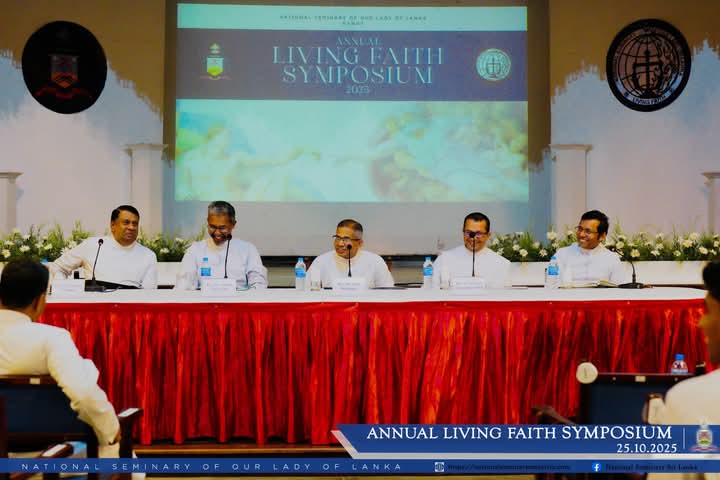
The Annual Living Faith Symposium of the National Seminary of Our Lady of Lanka, Ampitiya, was held on October 25, 2025, under a timely theme “The Integral Dignity of the Human Person in the face of current adversities.” The event brought together scholars, clergy, religious, and university students for an enriching dialogue on faith, science, and the human person in today’s rapidly advancing technological world.
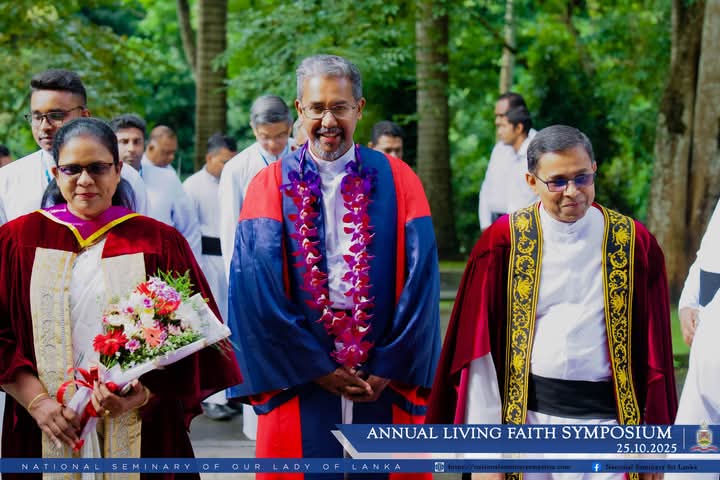
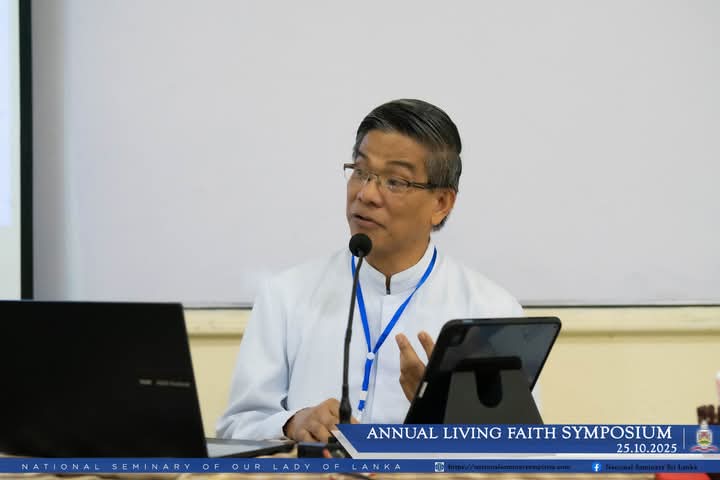
The keynote addresses were delivered by Rev. Fr. Dr. M. W. Sumeth Perera, SJ a cancer Bologist, Senior Lecturer in Biochemistry in Sabaragamuwa University, and Prof. Thushari Silva, Head of the Department of Computational Mathematics at the University of Moratuwa. Their scholarly insights opened a dynamic conversation on the relationship between human dignity, theological anthropology, and artificial intelligence (AI).
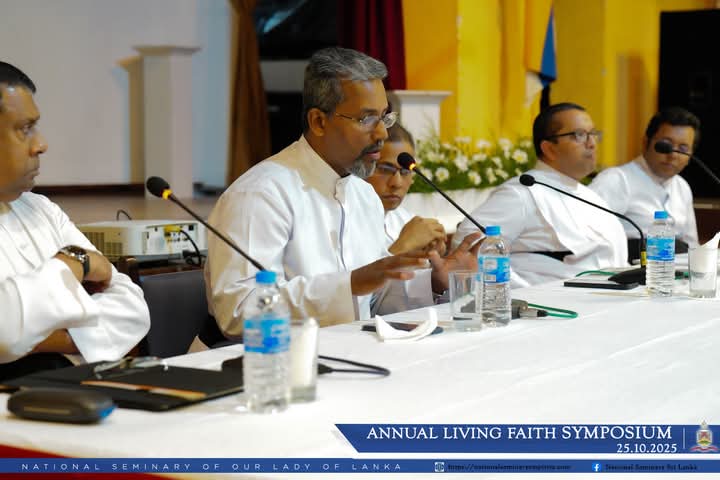
In his address, Rev. Dr. Sumeth Perera, SJ, reflected on the challenge of articulating human dignity and identity in an age dominated by science and technology. Drawing on Rowan Williams’ theological anthropology and Martin Buber’s philosophy of dialogue, he contrasted the reductive, mechanistic understanding of the human being as a “biological machine” with the Christian vision of the person as a relational and incarnational being.
Fr. Sumeth emphasized that true dignity does not arise from biological or functional capacities but from being created in the image and likeness of God (Imago Dei). Humanity finds its meaning in relationship with God, with one another, and with the created world. He called for a response of kenosis (self-emptying love), participation, and mutual transformation toward the “displaced other” in modern society. Only such a relational and incarnational framework, he asserted, can restore a coherent understanding of what it means to be human in today’s scientific and technological context.
Prof. Thushari Silva, in her presentation titled “AI and Human Dignity,” explored the ethical and moral responsibilities surrounding Artificial Intelligence. She explained that AI is not the creation of artificial consciousness but a scientific simulation of human cognitive functions such as reasoning, learning, and decision-making intended to augment human activity, not replace human identity or essence.
After the keynote addresses, audience had the opportunity to listen to 24 research papers on the same theme in 05 break-out rooms. Research papers from different state universities and academic institutes were able to cast light on vast spectrum of current day human dignity.
This year’s symposium held a special significance as it marked the 25th year of the Seminary’s ‘LIVING FAITH’ journey, which began in the year 2000. Over the past quarter-century, this academic and spiritual journal has built a long platform for dialogue between faith and reason, theology and science and among diverse new theological and philosophical currents in the world.
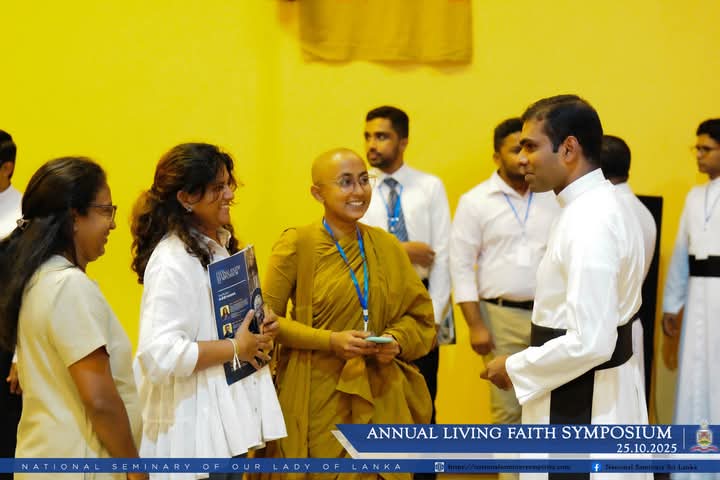
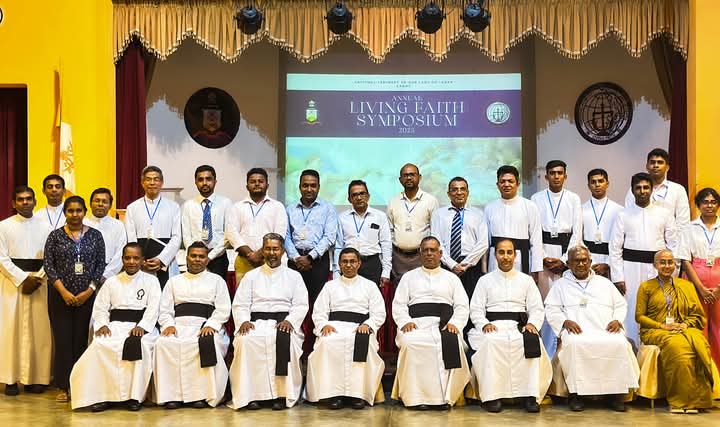
The symposium was attended by priests, brothers, sisters, venerable Buddhist Theros, university students, and scholars from across the country, fostering a spirit of interreligious dialogue and intellectual collaboration. The event was successfully organized under the guidance of Very Rev. Fr. Quintus Fernando, Rector of the National Seminary of Our Lady of Lanka, and Rev. Fr. Shashika Manoj the Moderator of the Living Faith Symposium together with the Seminary staff and student body. The day’s discussions offered a profound reminder that in an era increasingly shaped by science and technology, the essence of humanity remains rooted in relationship, love, and divine likeness in the Image of God. The integral dignity of the human person, as affirmed by faith and reason alike, must always be the foundation and final goal of all human progress.